What fire NOC category applies to leather and footwear manufacturing?
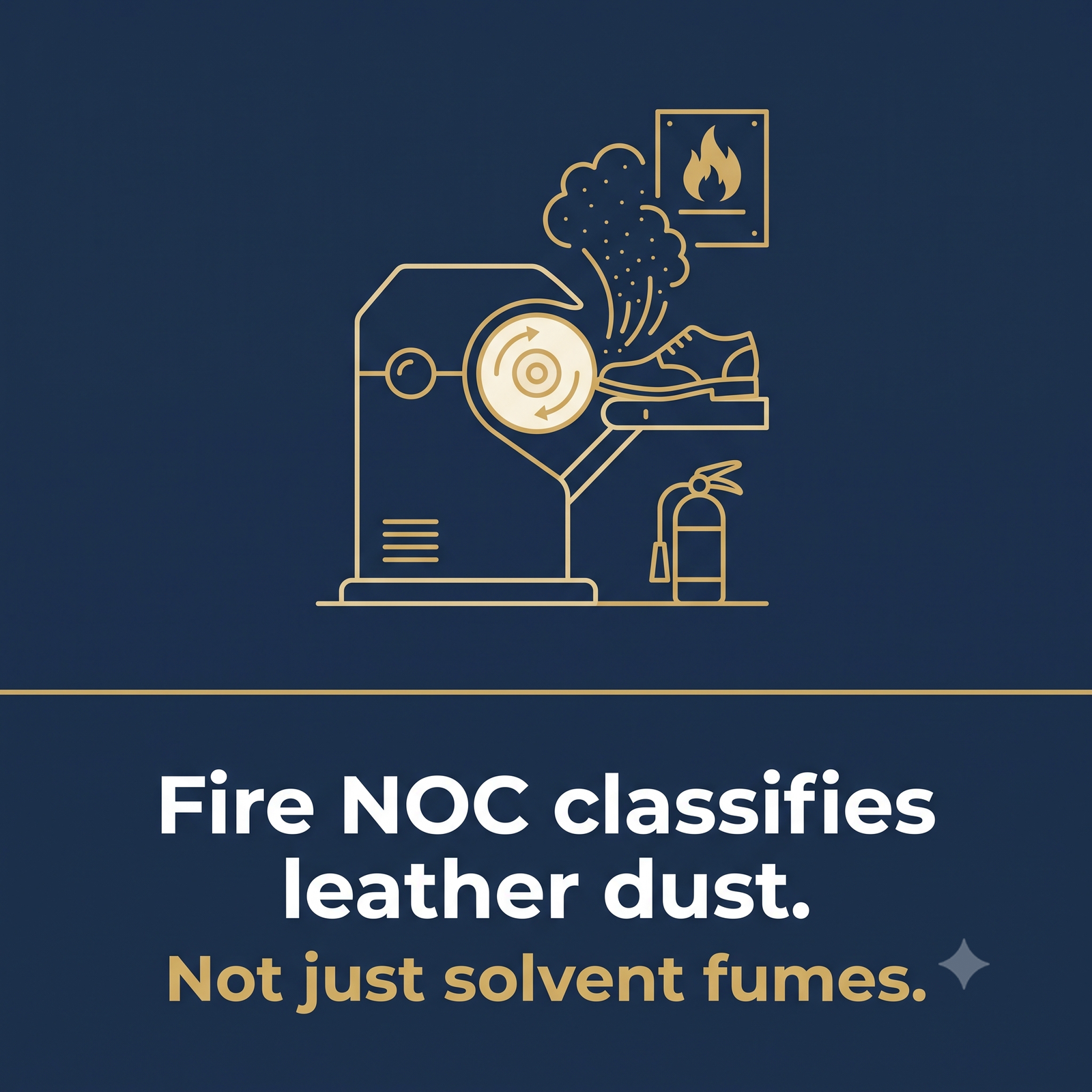
Leather footwear manufacturing with buffing, cutting and adhesive application falls under the Industrial or Storage occupancy category with a flammable load classification. The NOC must cover leather dust as a fire load, solvent fume hazard in the adhesive zone, sprinkler coverage for the buffing hall, and unblocked escape routes. A general industrial NOC issued for machine shops does not cover leather operations.
What HSPCB consent category applies to leather and tanning units?
Leather tanning and finishing falls under the RED category for HSPCB consent because of chromium and chemical effluent. Footwear manufacturing with only cutting, stitching and assembly — no in-house tanning or wet processing — falls under Green or Orange depending on solvent use. Red category cannot be downgraded to Orange. If the plot's existing consent is Orange or Green and you plan tanning, you cannot operate without applying for a fresh Red consent, which takes 6-12 months.
What ventilation does an adhesive zone need?
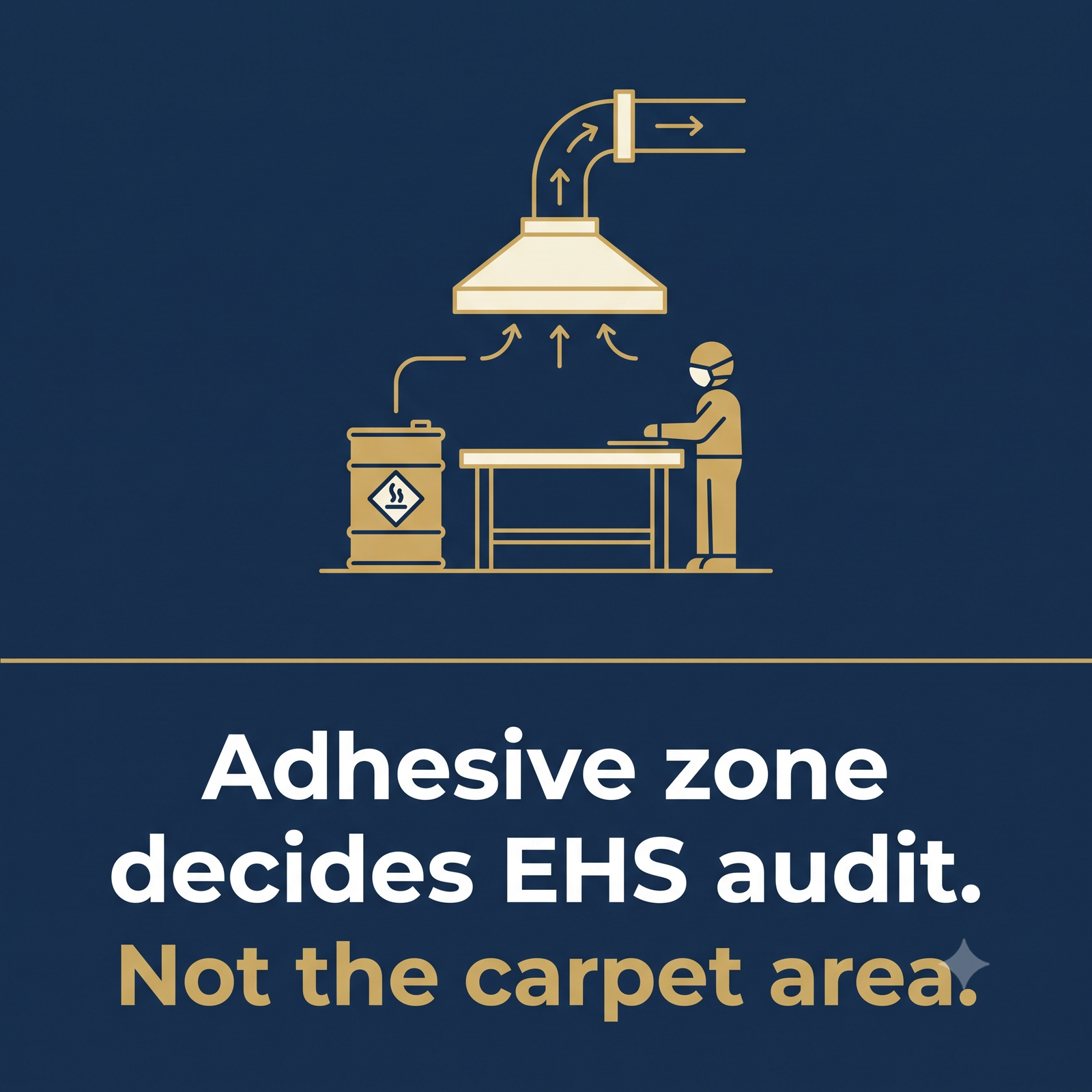
Adhesive zones using solvent-based glues require dedicated exhaust hoods directly above every adhesive station, with make-up air balancing to prevent negative pressure in the zone, and fresh air intake from outside the building envelope. The exhaust must discharge outside the workspace — not into a shared corridor. Adhesive vapour monitoring is standard under most buyer EHS audits. Recirculating air purifiers alone do not pass audit.
What slab loading do I need for leather cutting machines?
Hydraulic leather clicking presses and heavy cutting machines require a reinforced concrete slab with 4-6 T/sqm loading. Stitching floors with lighter machines run 2-3 T/sqm. Point-load verification is essential for clicking presses — a single press can load 2-3 tonnes on a small footprint. Verify the RCC design certificate, not the floor level.
What climate control is needed for leather storage?
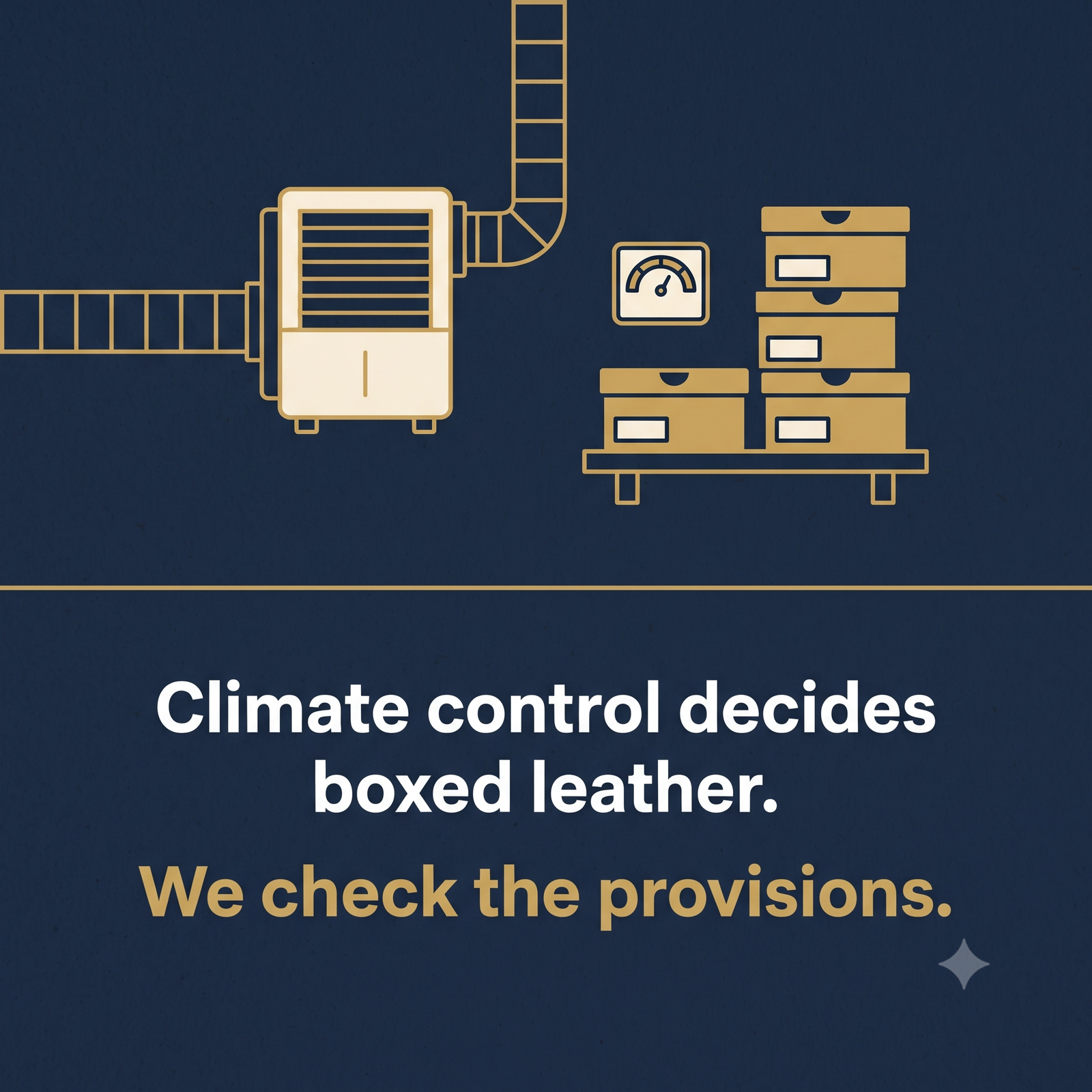
Finished leather and boxed footwear need relative humidity maintained between 45% and 55% to prevent mould growth and leather warping. Above 60% RH, mould develops within weeks. Below 40% RH, leather dries out and cracks. Industrial dehumidifiers or HVAC with humidity control are essential for boxed inventory and sample storage. Verify the provisions before committing to a unit.
What power load does a leather footwear unit need?
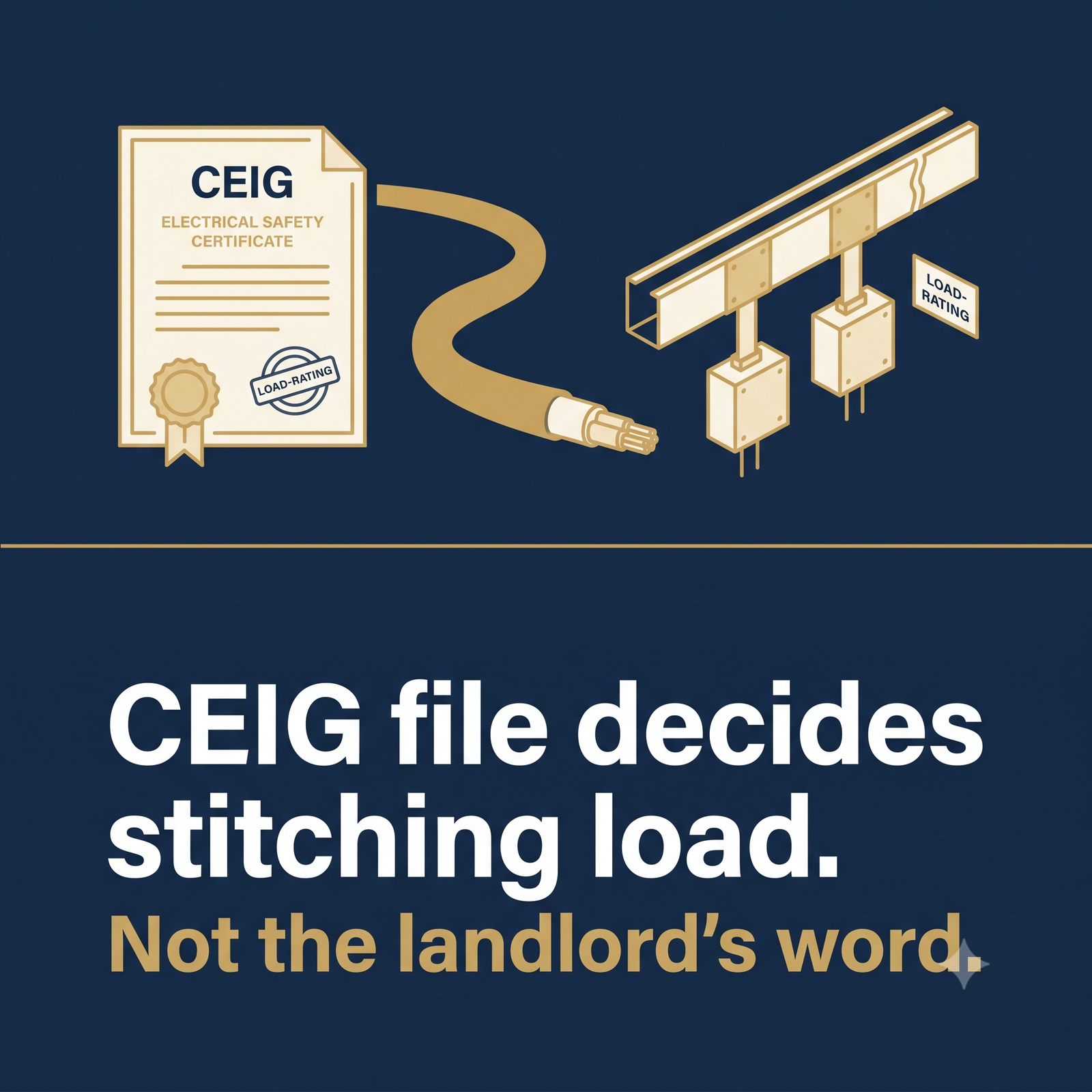
A footwear manufacturing unit running clicking presses, stitching machines, buffing wheels, adhesive ovens and dust extraction typically needs 80-150 KW of power depending on machine count. Add HVAC and climate control for storage and the requirement rises another 20-30 KW per 10,000 sq ft. Verify the CEIG certificate on file and whether overhead busbar trunking is installed at ceiling level for the stitching hall.
Do I need dust extraction for leather buffing?
Yes. Leather buffing, edge finishing and sole roughing all generate fine leather dust that is a fire and respiratory hazard. A centralised dust extraction system with ducting to every buffing station, a spark trap on the ducting, and a fire-rated collection hopper is standard. Individual portable vacuums are insufficient for a production buffing line and will fail both fire NOC and EHS audit inspection.
Where should I set up leather and footwear manufacturing in the NCR?
Farukhnagar and Pataudi suit footwear units with lower rents and established karigar labour pools for stitching and finishing. Kherki Daula and Binola work for export-oriented units needing container dispatch. Luhari and Bilaspur are best for larger units with integrated warehouse operations. IMT Bawal works for export-oriented footwear needing ICD access. IMT Manesar suits premium branded footwear manufacturing. Verify fire NOC for leather dust, HSPCB category for any tanning or finishing, and climate control provisions before committing.