What dock height is needed for e-commerce fulfilment?
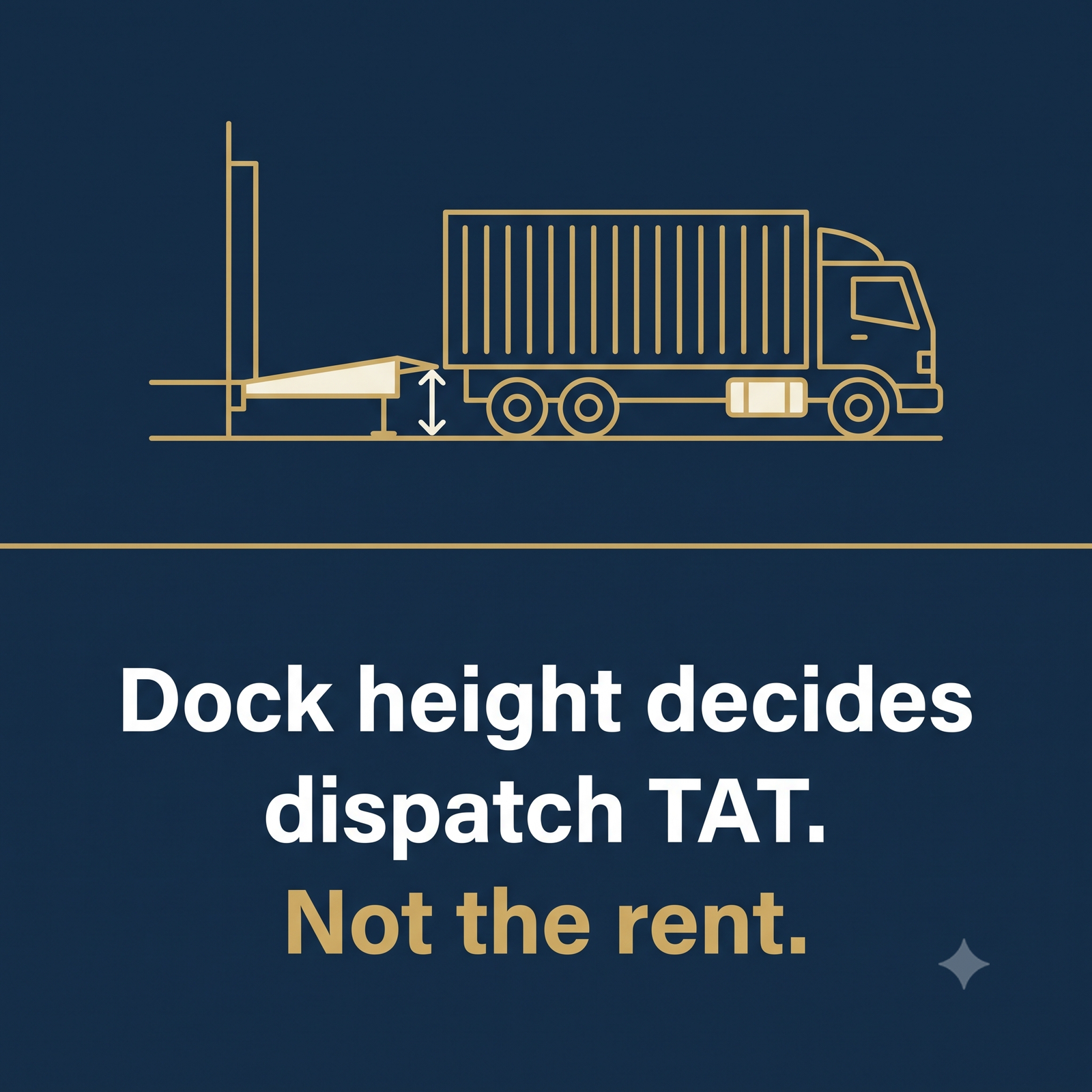
Standard dock height for e-commerce fulfilment in India is 1.2 metres above ground level, matching the bed height of a standard 32-ft or 40-ft container truck. Dock levellers extend 300–500 mm to bridge the gap. Missing this means manual unloading, which triples the loading time per truck and adds detention charges. We measure dock height, leveller range and apron depth on every site visit.
What floor loading do I need for racking?
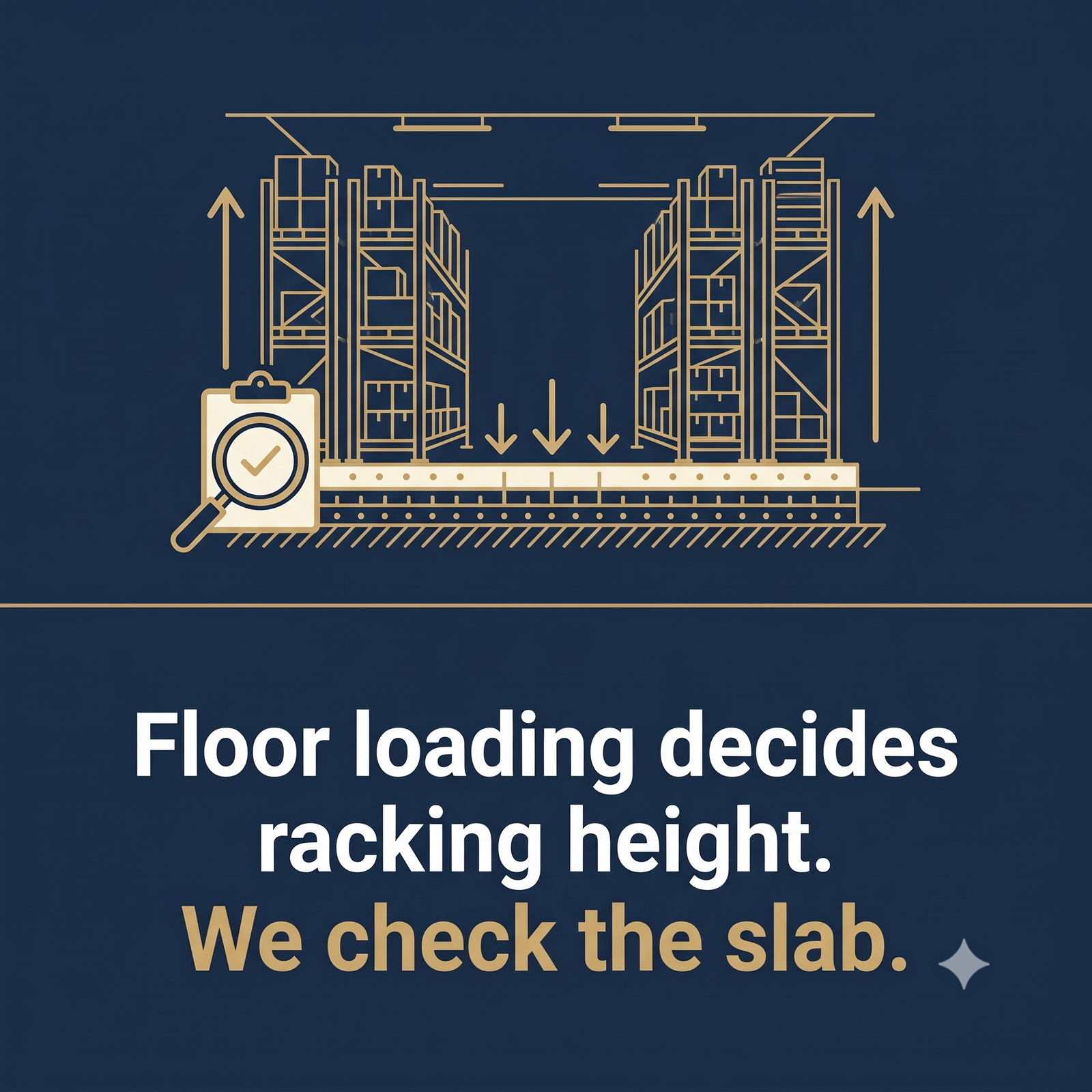
Ambient e-commerce racking typically requires a floor slab loading of 3–5 T/sqm. Heavy pallet racking at 6–8 metres height needs 5–7 T/sqm. Mobile racking or multi-tier mezzanines can push to 8–10 T/sqm. If the slab is below these figures, you cannot install the racking density you need — and the cost to reinforce a slab after construction is prohibitive. Ask for the slab loading certificate, not a verbal assurance.
Do I need a separate OC for a mezzanine?
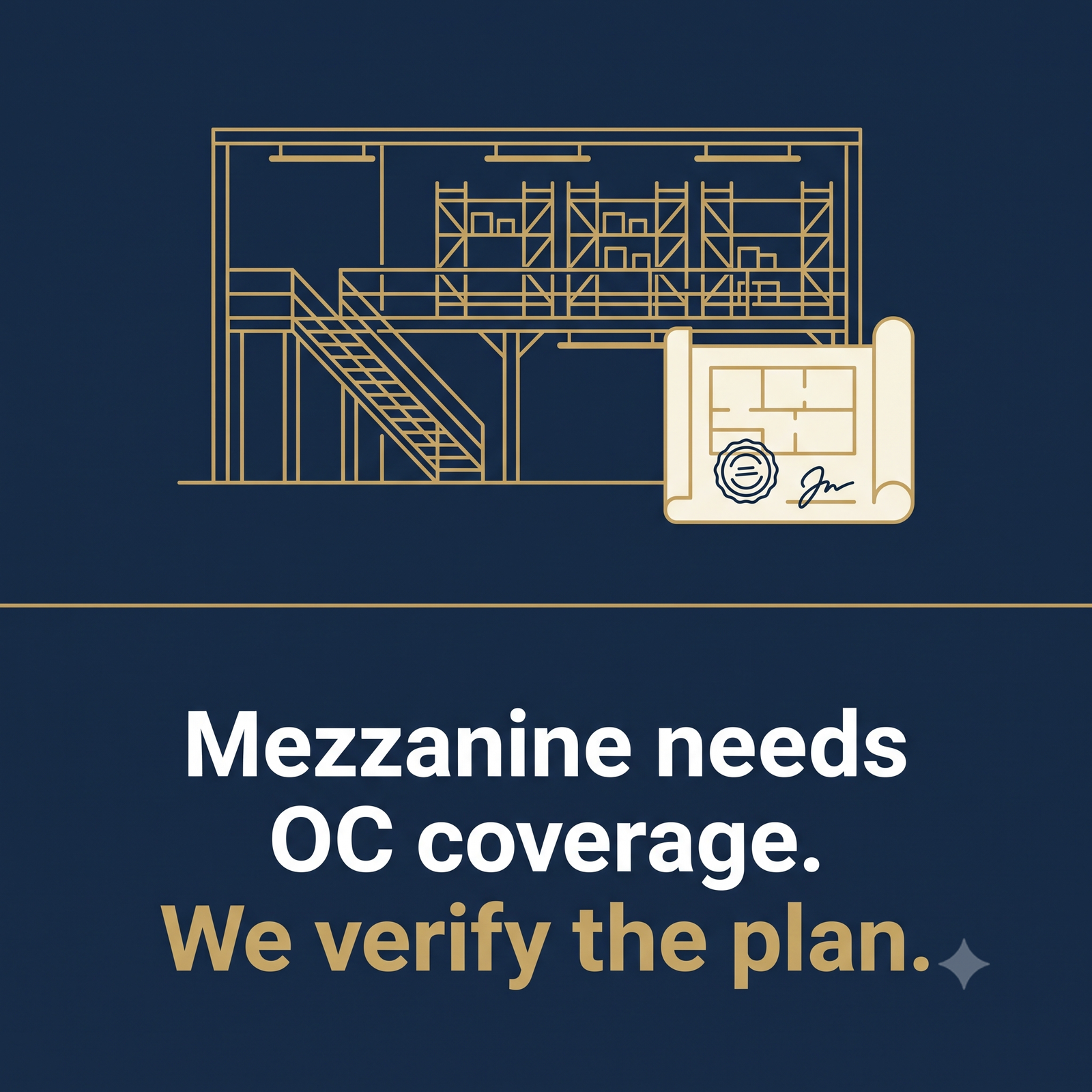
Yes, in most Haryana jurisdictions. A mezzanine structure that adds usable floor area requires either a modification to the existing Occupancy Certificate or a separate approval, depending on the municipal authority. Unapproved mezzanines can be flagged during a fire NOC inspection or a factory licence application, halting operations. Verify the OC before installing any mezzanine or multi-tier structure.
What fire NOC category applies to e-commerce warehouses?
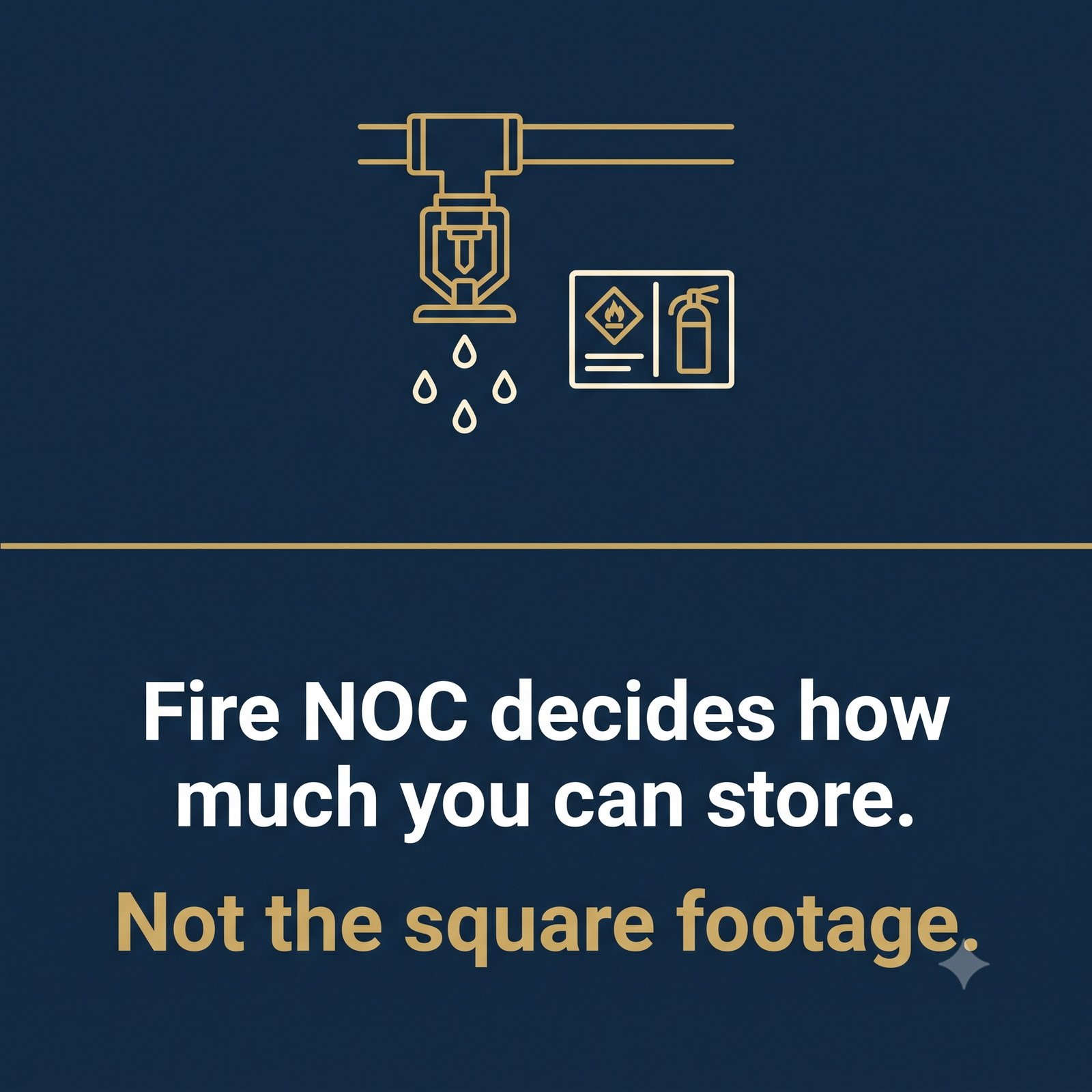
E-commerce warehouses storing general merchandise fall under the "Storage" occupancy category under Haryana Fire Safety norms. The specific sub-category depends on the class of goods — flammable, non-flammable, or mixed. Fire NOC coverage must match the stored goods class and the racking height. A NOC issued for low-height storage does not cover high-bay racking.
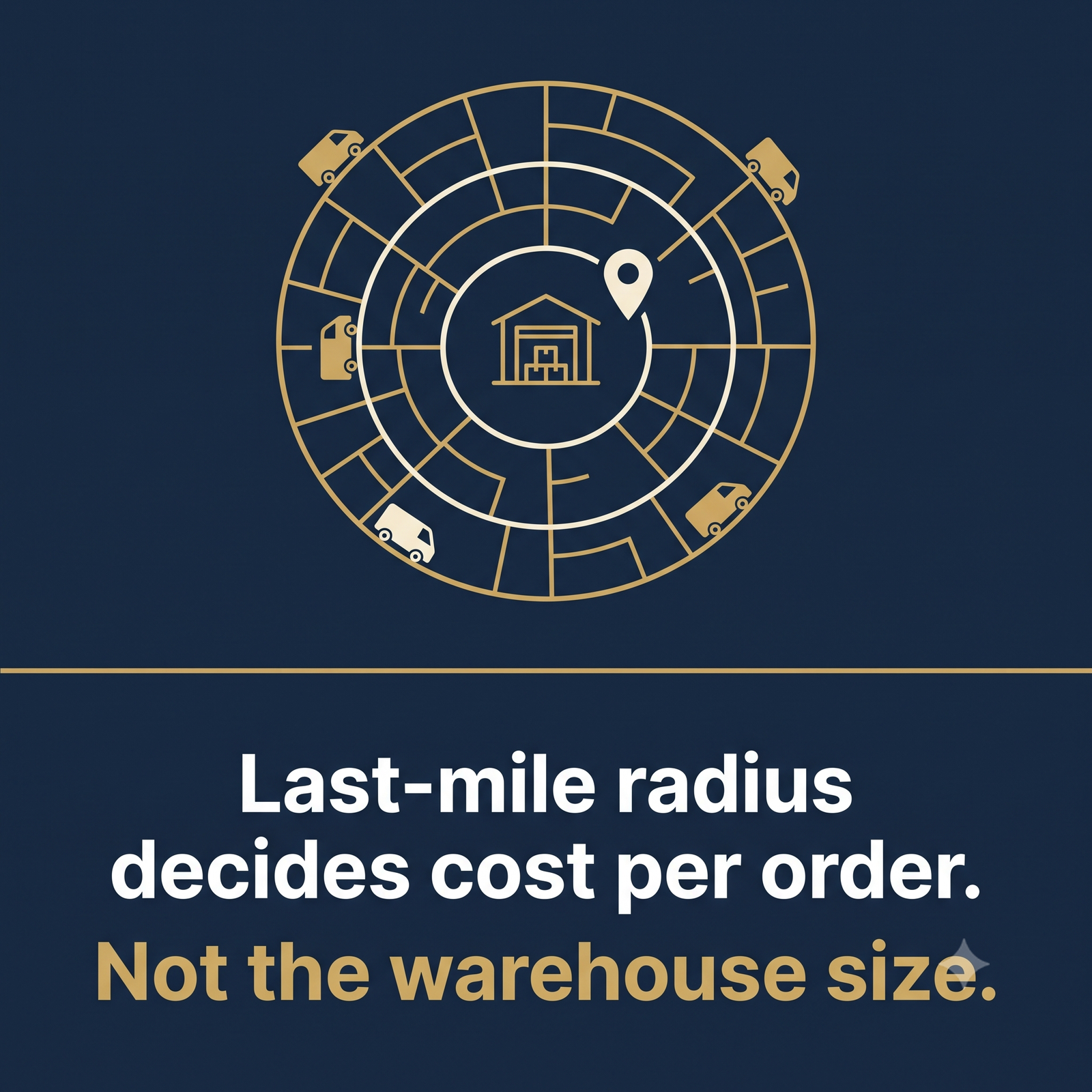
Why does last-mile radius matter for e-commerce warehouses?
Last-mile delivery accounts for 40–55% of total e-commerce logistics cost in India. A warehouse within a 15-km radius of the delivery cluster can complete more drops per vehicle per day than a warehouse 30 km out. For a 500-order-per-day operation, a 20-km reduction in average delivery distance saves roughly ₹40,000–60,000 per month in vehicle running cost and driver time.
What power load does an e-commerce warehouse need?
A standard e-commerce fulfilment centre runs on 40–80 KW per 10,000 sq ft depending on lighting, conveyor, sorting and air-conditioning load. Automated fulfilment centres with conveyors and sorters can run 100–150 KW per 10,000 sq ft. Sanctioned load below this will force derating of conveyor speed or lighting, reducing throughput. We check sanctioned KVA against your actual conveyor and HVAC specification.
How many truck bays do I need for a 50,000 sq ft fulfilment centre?
A 50,000 sq ft fulfilment centre dispatching 2,000–4,000 orders per day typically needs 4–6 dock bays plus 2–3 open truck parking bays for inbound and outbound staging. Bay count depends on the dispatch peak window, not the daily average. If 60% of daily dispatch happens between 4 PM and 9 PM, you need bays sized for that peak.
Where should I set up an e-commerce fulfilment centre in the NCR?
Binola and Kherki Daula serve south Delhi and Gurugram delivery clusters with NH-48 access. Luhari and Bilaspur suit larger fulfilment centres serving NCR-wide and inter-city movement. Farukhnagar and Pataudi are best for west Delhi and Gurugram west customers. IMT Bawal works for north India distribution and inter-state dispatch. The right choice depends on where your order density is highest.