What fire NOC category applies to hosiery manufacturing?
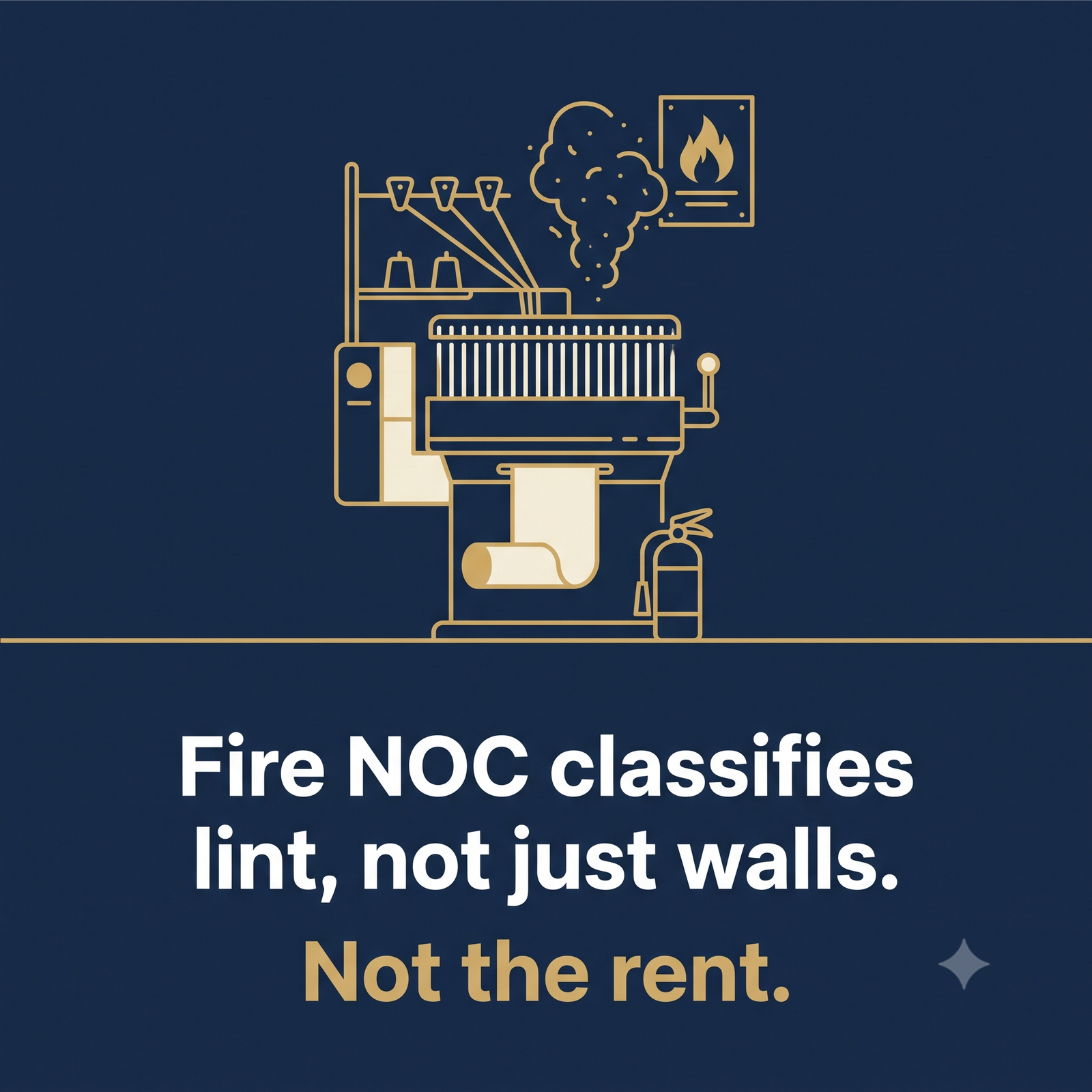
Hosiery manufacturing with high-density circular knitting machines and yarn storage falls under the Business or Storage occupancy category with a flammable load classification. The NOC must cover textile lint as a fire load, sprinkler coverage for the knitting hall height, and unblocked escape routes. A general industrial NOC issued for machine shops does not cover hosiery operations.
What ETP capacity do I need for hosiery dyeing?
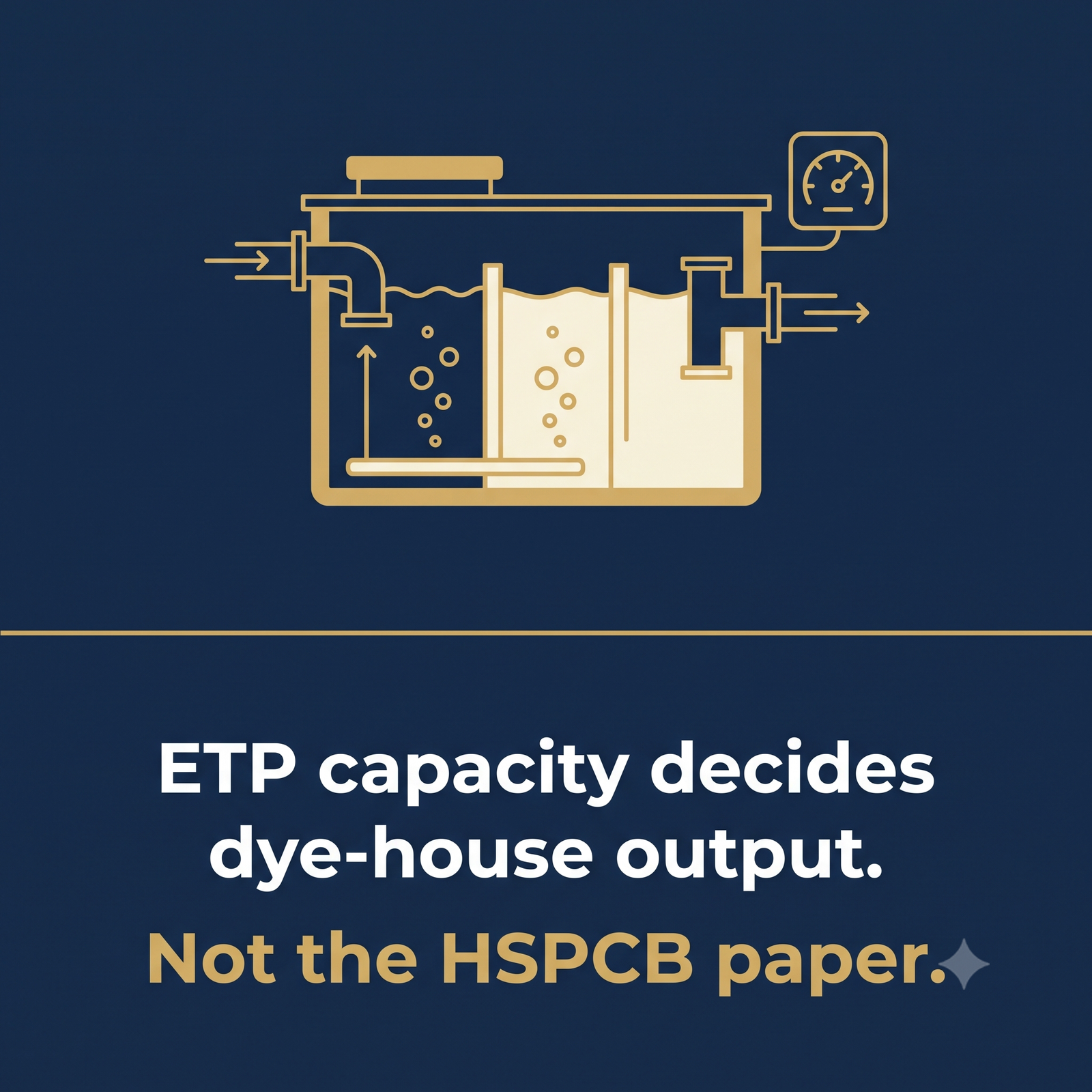
A hosiery unit running dyeing operations needs an ETP sized for peak daily effluent discharge, not average. A small dye house processing 1-2 tonnes per day typically needs 20-40 KLD ETP capacity. Medium units processing 5-10 tonnes per day need 80-150 KLD. If the ETP capacity on file is below your discharge volume, the HSPCB consent cannot be upgraded — and you cannot run the dye house.
What slab thickness do I need for circular knitting machines?
Circular knitting machines generate continuous vibration and require a reinforced concrete slab with minimum 150mm thickness and adequate steel reinforcement. Some high-speed machines need 200mm or more. A slab that flexes under vibration will cause needle misalignment, dropped stitches and quality failures. Verify the RCC design certificate — not just the floor level.
Do I need a goods lift for a multi-floor hosiery unit?
Yes, in almost every multi-floor hosiery unit. Moving yarn cones, fabric tubes and finished bales between floors manually is impractical at scale. A dedicated goods lift with at least 2-tonne capacity is standard. Passenger lifts cannot handle the throughput. Verify the lift capacity and whether it is genuinely dedicated.
What HSPCB consent category applies to hosiery units?
Hosiery manufacturing with only knitting and stitching falls under Green category — no process effluent. Units with washing or dyeing fall under Orange or Red depending on effluent volume and chemical load. Green consent cannot run a dye house. The category determines whether an Effluent Treatment Plant is required and what discharge standards apply.
What power load does a hosiery unit need?
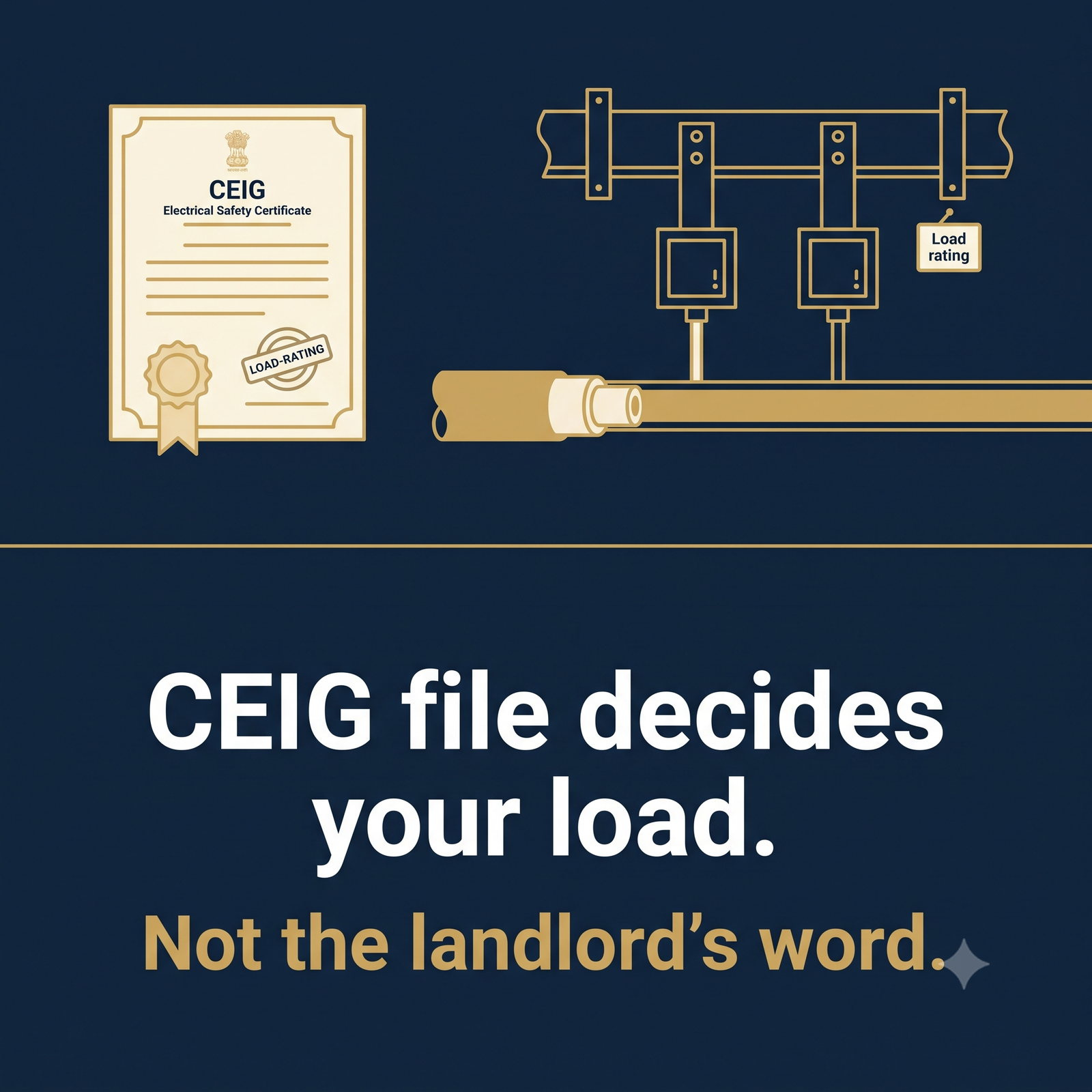
A knitting floor running 30-50 circular knitting machines requires 60-120 KW of power depending on machine count and motor ratings. Add stitching, finishing, humidification and lighting and the requirement rises another 30-40 KW per 10,000 sq ft. Dyeing operations add significantly higher load for boilers, pumps and heaters. Verify that overhead busbar trunking is installed at ceiling level for the knitting hall.
What humidity control do I need for hosiery yarn storage?
Yarn storage and knitting halls need relative humidity maintained between 55% and 65% to prevent yarn breakage. Below 45% the yarn becomes brittle and breaks during knitting. Above 70% promotes fungal growth on stored yarn. A building with proper humidity control infrastructure — HVAC or evaporative cooling with humidity monitoring — is essential. Older industrial stock without humidity provisions adds capital cost.
Where should I set up hosiery manufacturing in the NCR?
Farukhnagar and Pataudi suit hosiery units with lower rents and established karigar labour pools for knitting and stitching. Luhari and Bilaspur work for larger units with integrated warehouse operations. IMT Bawal is best for export-oriented hosiery with container access to the ICD. IMT Manesar suits premium retail hosiery and branded garment manufacturing. Verify fire NOC for textile lint, ETP capacity if dyeing, and RCC slab for knitting machines before committing.